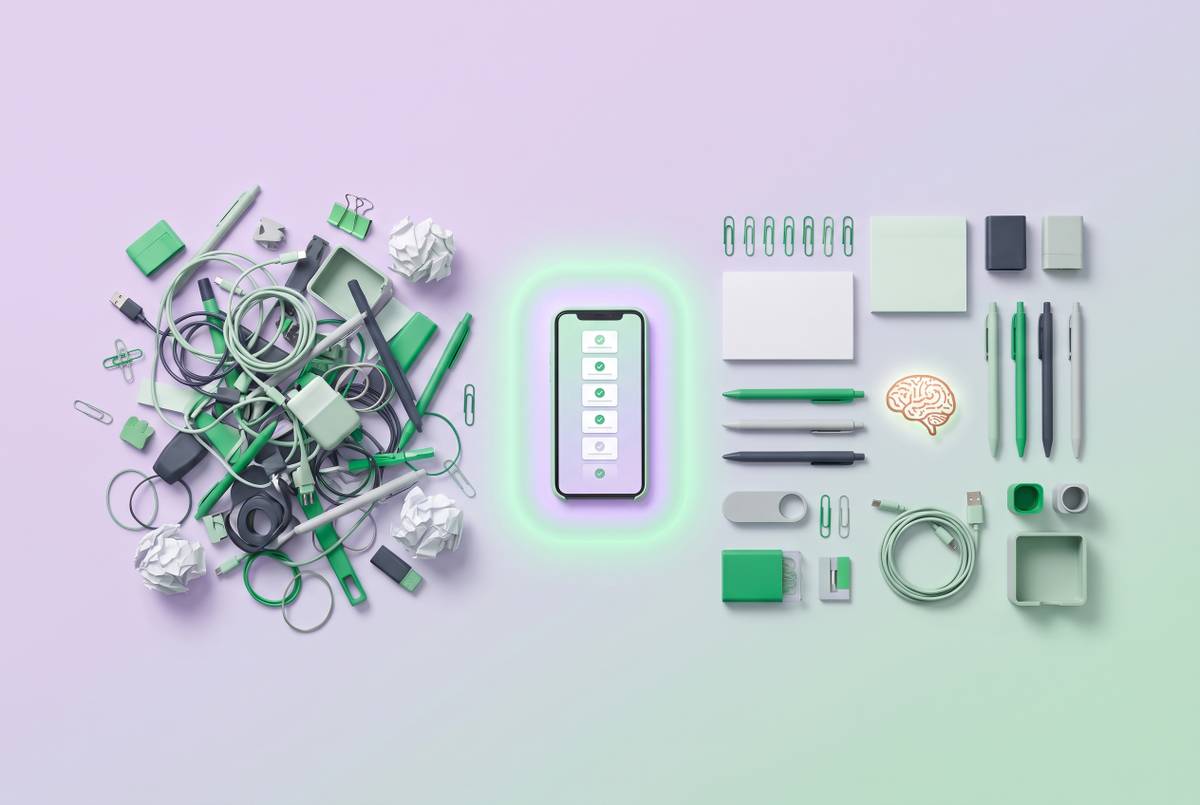
Hyperfocus vs Avoidance Cycles in ADHD
Hyperfocus and avoidance stem from the same reward-driven system, not separate character flaws.
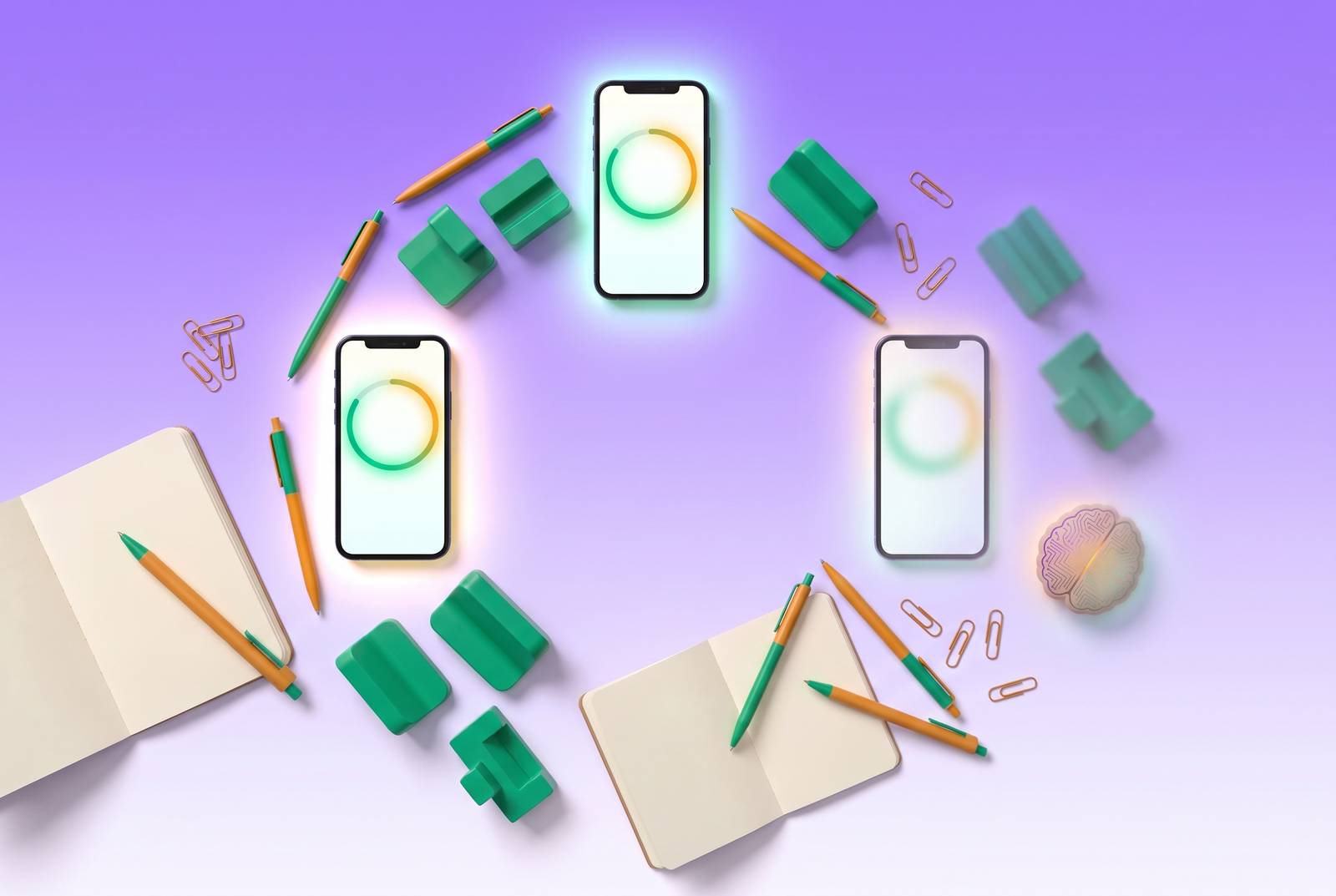
Someone can lose hours to a single task, surface starving and stiff-necked, and still not manage to open the one email that's been sitting in the inbox for a week. The same brain that locks onto one thing with total absorption can refuse, flatly, to engage with another. People read this as two separate failures: a hidden talent going to waste on the one hand, a discipline problem on the other. ADHDers get told to "harness" their hyperfocus for productivity while getting blamed, in the same breath, for the avoidance that sits right next to it, as if these were unrelated traits of character rather than two readouts of the same gauge. They aren't separate: hyperfocus and avoidance come out of one underlying mechanism, a brain that engages based on salience and reward rather than on intention, and treating them as one cycle instead of two unrelated problems is what actually makes them manageable.
The single mechanism that produces both states: salience-driven engagement
This misreading has a cost: ADHDers are told to "harness" their hyperfocus while simultaneously being blamed for the avoidance, which treats two outputs of the same system as unrelated character traits. It responds to salience, meaning novelty, urgency, or built-in interest can pull it toward a task, while a task without any of those signals simply fails to hold it, no matter how much the person wants to do it or how clearly they understand why it matters. Why does wanting to do something count for so little here? Because engagement in this system isn't driven by intention or priority, it's driven by whatever registers as stimulating enough in the moment. At the chemical level, lower baseline dopamine and underactive reward pathways mean the brain needs feedback close to immediately, not stretched out over days or weeks. This is why the space between "important" and "interesting" causes so much trouble for people with ADHD. A task can be enormously important and still generate almost no pull.
Barkley's unified framework for executive function names four domains that break down in ADHD: behavioral inhibition, working memory, internalized speech, and the regulation of emotion, motivation, and arousal. That last domain carries most of the weight in this story, since it governs why engagement tracks salience instead of tracking priority. A 2026 framework in Frontiers in Psychiatry gives this a name: Operational Capacity, the idea that ADHD involves a finite, threshold-dependent tolerance for sustained mental engagement under cumulative demand, rather than a flat, unchanging deficit in executive skill.
Engagement in this model holds steady as long as cognitive load stays under some threshold. Near that threshold, though, engagement turns fragile and can collapse all at once rather than tapering off. Disengagement feels abrupt and involuntary instead of gradual, matching what patients describe when they say their focus "just slips." Hyperfocus, in this same framework, is salience-driven over-stabilization: engagement gets locked in because salience is running high, and the cost is reduced flexibility to switch away from it. Avoidance comes out of the identical system working in the opposite direction. Anticipated overload of that buffer leads to tasks piling up, scrambling to start at the last minute, and repeated cycles of starting and stopping, because the same threshold has tipped the other way.
Defining hyperfocus
Hyperfocus gets sold as a secret strength waiting to be pointed at the right project, but the research pushes back on that picture. It makes more sense as a state the ADHD brain falls into, not one it selects. A 2026 study in the Journal of Affective Disorders Reports, by Samson, Rochat, Perroud, and Debbanné, found that hyperfocus can work as an avoidance-based way of regulating emotion in ADHD, with emotion reactivity mediating between cognitive-affective flexibility and how often hyperfocus occurs. Hyperfocus isn't only about productivity, in other words. It can be a way of escaping emotional discomfort, and it appears most often right when something stressful or tedious needs doing instead. The same study found that switching away from emotional content faster tracks with higher emotion reactivity in ADHD, suggesting that a deficit in cognitive-affective flexibility is what drags people into hyperfocus rather than letting them redirect their attention on purpose.
The consequences appear in missed deadlines, neglected self-care, and strained social life. The Oroian, Nechita, and Szalontay study in European Psychiatry found hyperfocus correlated with missed deadlines and neglected self-care, especially for people without much routine structure, and a majority of participants said hyperfocus had hurt their social lives. These are the very outcomes the avoidance function of hyperfocus was supposedly trying to prevent. A separate study found that greater ADHD symptom severity and executive function trouble tracked with more frequent hyperfocus, but executive function difficulties only partly explained hyperfocus during genuinely rewarding activities. Reward sensitivity, then, is doing something on its own that executive function alone doesn't account for. Hyperfocus during a task someone actually finds rewarding isn't the same state as hyperfocus used as avoidance, and mixing the two together leads to advice that misses the point either way, whether that means treating all hyperfocus as pathological or trying to schedule it like a reliable resource.
The research doesn't flatten this into one grim diagnosis, either. The Oroian study also found that a minority of participants said hyperfocus occasionally improved shared activities and boosted their output in roles with flexible structure. That's a real finding, not a footnote to be waved away. But the broader pattern still holds: hyperfocus isn't something a person can reliably summon or dismiss on command, and that unpredictability is what the salience model predicts, since the brain is responding to whatever is most stimulating in the moment rather than to a plan.
Why avoidance resists "just start
Task paralysis, the experience of knowing precisely what needs to happen and still being unable to begin, is the avoidance half of the same salience-driven engagement system described above. When a task carries no urgency, no novelty, and no built-in reward, the brain's engagement mechanism doesn't switch on, full stop.
Working memory overload makes this worse. When the brain tries to hold too many steps, priorities, or consequences in mind at once, that overload pushes the system toward shutting down or drifting toward something less demanding, which is exactly the threshold collapse the Frontiers framework describes. Working memory overload produces the same collapse that produces hyperfocus, just running in the opposite direction, and the emotional thread from the previous section applies here too: the same emotion reactivity that pulls someone into hyperfocus as escape also makes low-salience tasks feel disproportionately unpleasant, raising the amount of effort it takes just to start.
The toll is measurable. The Oroian, Nechita, and Szalontay study in European Psychiatry found that a large majority of participants reported frequent trouble with decision-making, and more than two-thirds, 68% specifically, said decision paralysis significantly hurt their work performance. Executive dysfunction scores were a strong predictor of lower life satisfaction and higher perceived stress in the same data. Layered on top of all this is shame: reading avoidance as laziness or a character flaw adds a weight of shame to what's already a documented executive difficulty, and that shame itself drives more avoidance, tightening the loop further.
None of this makes the frustration of avoidance disappear, and it shouldn't be dressed up as something other than what it is. But recognizing avoidance as a predictable output of the same system that produces hyperfocus changes where the fix needs to go. The target becomes the system's conditions, not the person's will. Seeing hyperfocus and avoidance as one cycle rather than two unrelated failures is the first real step toward doing anything differently, which is exactly where the next section goes.
How the cycle sustains itself and keeps people stuck
Putting hyperfocus and avoidance next to each other reveals a loop. Avoidance lets low-salience tasks pile up, the pile raises the cognitive load required to eventually deal with them, that load raises the odds of paralysis, and paralysis makes hyperfocus on literally anything else look even more rewarding by comparison. Each piece locks the next one in.
Urgency can break the loop, at least for a while. Deadlines bring in the novelty and pressure the salience system actually responds to, and that is why last-minute scrambling occurs so often in ADHD. The system is doing precisely what it's built to do, just at the worst possible moment to do it. The Frontiers in Psychiatry buffered-state model calls this asymmetric re-engagement: once the engagement buffer collapses into avoidance, getting it back takes an outsized push rather than a gradual recovery. People so often describe needing a crisis, or a sudden surge of interest, just to get moving again.
Shame speeds the whole cycle up. Believing that avoidance reflects some flaw in character makes the avoided task feel even more unbearable emotionally, which widens the gap in salience between that task and whatever hyperfocus happens to be offering instead, deepening the lock-in. A 2026 study in Psychological Reports found that internal shame significantly explained the link between adversity and reduced well-being. Shame is doing its own independent damage inside this loop, separate from the underlying condition. That damage isn't only internal, either: research shows a large majority of adults with ADHD anticipate discrimination in daily life and sense public stigma around the condition, so self-acceptance work is pushing against a real social backdrop, not just against distorted thinking inside one person's head.
The intervention logic shifts entirely. Nobody fixes hyperfocus on its own and avoidance on its own as if they were different ailments. What actually changes is the set of conditions driving both, since they're outputs of the same engine.
Why interventions that treat hyperfocus and avoidance separately tend to fail
Generic productivity advice fails ADHDers because it treats symptoms individually: "schedule your hyperfocus" and "just break tasks into steps" both ignore that the underlying engagement system will override any plan that doesn't account for salience.
One serious objection deserves a straight answer here: shouldn't hyperfocus during a genuinely rewarding task be left alone, since it's neurologically distinct from hyperfocus driven by avoidance, and shouldn't get treated as a problem to solve? The research actually backs this distinction. Executive function difficulties explained how often hyperfocus happened overall but not hyperfocus during specifically rewarding activities. The goal, then, is to reduce the avoidance-driven version that functions as emotional escape, not to suppress hyperfocus that comes from genuine interest, and to build enough structure around the low-salience tasks that the gap between them and hyperfocus narrows.
Avoidance interventions built around willpower run into the same wall from the other direction. "Just start for five minutes" doesn't touch the threshold collapse described in the buffered-state model. It asks the brain to perform the exact move its own architecture makes hardest.
Practical approaches that work with the salience system rather than against it
Effective strategies share one design principle: they reduce the salience gap on low-engagement tasks, by adding urgency, novelty, or reward, and they reduce the cost of switching out of hyperfocus, instead of asking for willpower the system can't reliably produce on demand.
Friction at the very start of a task raises resistance more than any other factor in getting started. The first 30 to 60 minutes after waking are high-stakes for the ADHD brain specifically: executive function is at its lowest point of the day, and every small decision adds to the load that tips things toward avoidance. A clinical guide from the A.D.D. Resource Center, from January 2026, recommends engineering the environment ahead of time, using external cues, and pairing actions with immediate rewards to cut down resistance right at that point. Voice-first input helps for a similar reason: it removes the double burden of typing out thoughts while also structuring them, letting someone capture an idea by speaking it before executive function has a chance to drop further. A 2026 practitioner guide lays out what an ADHD-friendly tool needs to do: minimize decisions, capture information quickly and ideally by voice, organize automatically, send reminders at the right moment, and avoid punishing a person for using it inconsistently.
Creating artificial urgency works directly against task paralysis. The Pomodoro Technique uses a timer to carve out a defined stretch of urgency, a short work interval followed by a short break, substituting a manufactured deadline for the intrinsic interest a task doesn't have on its own. Live body-doubling sessions add a different kind of salience, the presence of another person changing the reward context of a task without requiring the task itself to become more interesting. AI tools that break tasks down automatically, alongside visual planning tools, reduce working memory load by moving task structure outside the person's head, which lowers the overhead that tips the system toward avoidance.
Gamification works on the same reward system from another direction, functioning as a real scaffold for dopamine. One well-known app turns daily tasks into a role-playing game; another grows a virtual tree that dies if someone leaves the app, using loss-avoidance to hit the salience system from an angle different from simple reward, so staying on task feels rewarding in the moment rather than only in some delayed payoff. A system called WADAQ, described in a paper from the ACM Web for All Conference in October 2025, uses AI-driven gamification and reinforcement learning to recommend mini-games tailored to a person's own cognitive and executive-function profile, moving gamification from a one-size-fits-all feature toward something calibrated individually. Most people with ADHD do better combining two or three complementary tools rather than betting everything on one, and novelty itself can explain a lot of the enthusiasm people feel in the first few weeks of trying something new. The design question that actually matters is whether engagement holds up once the novelty fades, not whether a tool feels exciting on day one.
None of this amounts to a cure for the cycle, and nothing here promises that hyperfocus becomes schedulable or that avoidance disappears for good. What changes, once the mechanism is understood, is where the effort gets aimed: not at willpower, not at character, but at the actual gap between what's salient and what's merely important, which is the gap this whole cycle runs on.
Sources
- Cognitive-affective flexibility in adult ADHD: Links to emotion reactivity and hyperfocus - ScienceDirect
- (PDF) Hyperfocus in ADHD: A Misunderstood Cognitive Phenomenon
- Frontiers
- The role of executive functions in mediating the relationship between adult ADHD symptoms and hyperfocus in university students - ScienceDirect
- ADHD and Decision Paralysis: Overwhelm in a World of Choices
- Intelligent Human Systems Integration (IHSI), Vol. 200, 2026, 20–30