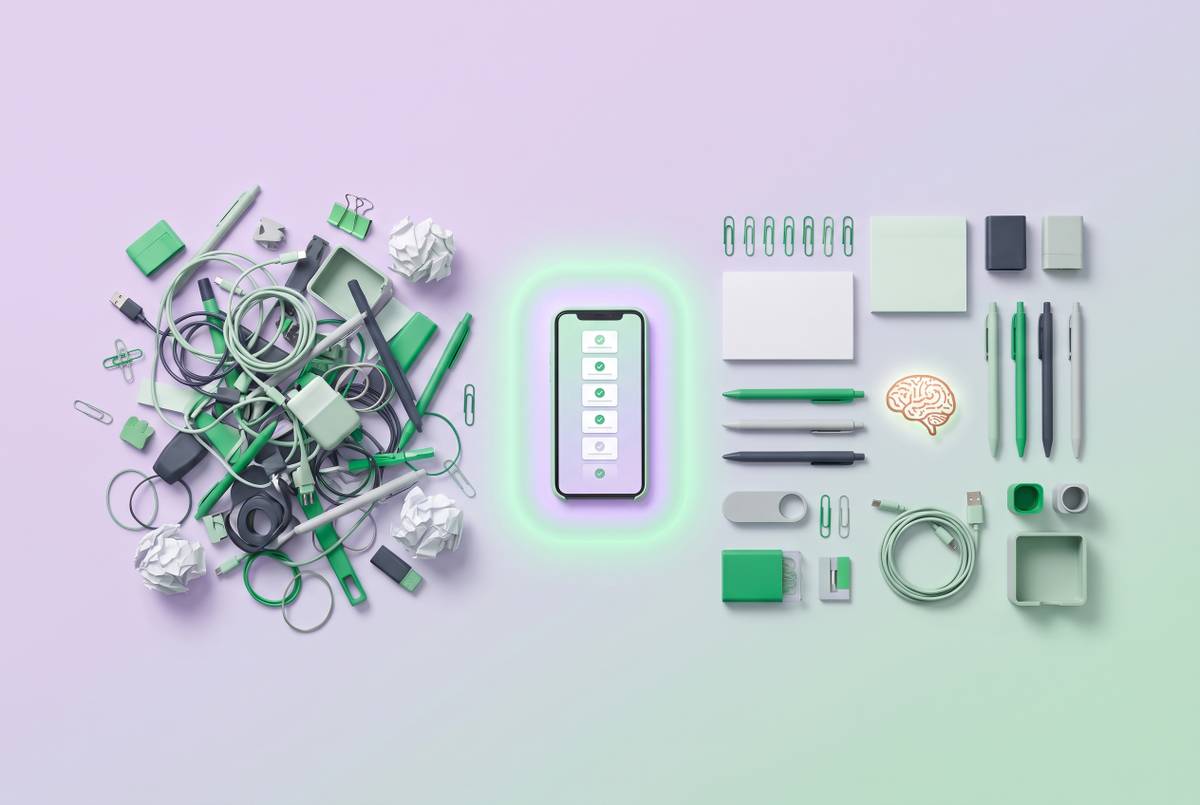
Emotional Overwhelm and ADHD Shutdowns
How ADHD brains get stuck when emotional and cognitive demands exceed their capacity.

The middle of a workday, a stack of tasks that all suddenly feel impossible, and a body that will not move off the couch even though the mind is screaming that it should. That scene is the most common entry point into ADHD shutdown, and it gets misread constantly, by bystanders and often by the person experiencing it. Lying still, ignoring a phone that will not stop buzzing, avoiding a task so small it should take five minutes, and feeling a wave of guilt about all of it: these are the visible symptoms, and they look a great deal like laziness or a bad attitude. What is actually happening is a state of acute cognitive and emotional paralysis, where the brain becomes temporarily unable to start, continue, or finish a task despite knowing what needs to happen.
That gap between the external picture and the internal reality is where most of the shame comes from, and clearing it up matters before anything else. Shutdown differs from procrastination in a specific way: procrastination involves a choice to put something off, while shutdown removes the capacity to choose otherwise in that moment. It differs from depression too. Shutdown tends to be tied to a specific task or situation and lifts once the overwhelming demand is removed, whereas major depressive disorder produces a pervasive low mood or loss of pleasure across nearly all activities, not tied to any single trigger. ADHD burnout is a related but separate pattern: a longer, sustained depletion from years of masking and overcompensating, with shutdown as an acute episode that can occur within that larger exhaustion.
None of this appears as its own line in the DSM-5-TR. Shutdown describes a behavioral phenomenon that sits within the documented executive function impairments already associated with ADHD, especially initiation failure and emotional dysregulation at their most extreme expression. That clinical framing matters because it reclassifies the entire experience. A person is not failing to manage a to-do list. A person's executive function system has hit a limit that can be described, measured, and, to a real extent, anticipated, which is what the next section works through.
The neuroscience behind the freeze: what the prefrontal cortex is doing during shutdown
Shutdown is a predictable failure mode of a system running below capacity before the trigger even hits, not a character defect showing up under pressure. The prefrontal cortex governs the executive functions responsible for working memory, impulse control, and the initiation of goal-directed action, and it does this through dopamine and norepinephrine signaling that is already dysregulated and reduced in ADHD brains relative to neurotypical ones. That baseline difference is the starting condition. It explains why the same demand that a neurotypical brain absorbs without much friction can tip an ADHD brain into paralysis.
Why does added stress make things worse instead of better, the way it sometimes does for other people under deadline pressure? The answer runs through what researchers describe as an inverted-U relationship between catecholamine levels and prefrontal function. Too little dopamine, which is closer to the ADHD resting state, impairs PFC performance. Too much, the kind of surge that arrives with acute stress, impairs it as well. Stress does not sharpen ADHD executive function the way it might sharpen focus in someone without ADHD. It collapses what little capacity was available.
Working memory is where this collapse becomes concrete. The PFC relies on working memory to hold task instructions, sequence the steps of a plan, and monitor progress as it goes. In ADHD, that capacity runs below baseline to start, and under stress or emotional load it gets further impaired, to the point where a person cannot sequence a task or even recall how to begin it. It is a volume problem layered on a filter that was already letting too much through, and the combination leaves nothing left to hold the plan steady.
Brain imaging adds another layer to this picture. Functional MRI studies show individuals with ADHD have reduced suppression of the default mode network, the network associated with mind-wandering and internally focused thought, during task performance. In shutdown, that default mode network activity overwhelms task-positive network activation, producing the blank, static feeling that so many people describe when asked what shutdown feels like from the inside. The mind is not refusing to engage. The network responsible for focused engagement is being outcompeted by the network responsible for drifting.
Put together, shutdown functions as a circuit breaker. The brain protects itself by cutting power to a system that has already been pushed past what it can regulate, which makes shutdown a survival mechanism rather than a motivational failure. Emotional dysregulation runs through this same circuitry rather than sitting apart from it, driven in part by deficient sensory gating in the anterior cingulate cortex. The shame and overwhelm that show up during shutdown are generated by this same neurological process rather than by any weakness layered on top of it.
The four types of overwhelm that lead to shutdown
Overwhelm is not one uniform experience, and figuring out which kind is active is the first useful move toward doing something about it, because each type has its own driver and its own way out. Four distinct categories appear repeatedly in how ADHD overwhelm gets described, and most shutdowns involve more than one arriving at once.
Cognitive overwhelm is the "too many tabs open" feeling. Working memory, already reduced, overflows when its limited capacity gets exceeded, competing thoughts crowd each other out, and the thread of what was being done mid-task gets lost. Emotional overwhelm works differently. ADHD brains tend to experience emotions more intensely and with fewer built-in regulation tools, so fear, frustration, or anxiety can flood the system and trigger a fight-or-flight response that makes rational problem-solving nearly impossible. Emotional dysregulation appears in a large share of adults with ADHD, well above what is seen in neurotypical populations. The emotional route into shutdown is one of the most common paths in. It is one of the most common paths in.
Logistical overwhelm arrives through tasks that require sequencing multiple decisions, the kind of thing that sounds ordinary on paper, like planning a move or filing taxes, but overwhelms the planning circuits because holding the big picture together while managing every detail asks more of the PFC than it can sustain. Sensory overwhelm is the fourth category, and it has been studied directly. A systematic review and meta-analysis by Jurek and colleagues found that people with ADHD show significantly higher sensory sensitivity, sensory avoidance, sensory seeking, and low sensory registration compared to controls. When sensory input stacks on top of emotional load, the system overloads faster than either would alone.
One might argue that decision fatigue deserves its own fifth category, and in practice it acts as the multiplier across all four. The ADHD brain struggles to filter out irrelevant options, so even small choices can feel disproportionately large, and a long task list does not solve this. It deepens the freeze by putting every option in view at once with no built-in way to rank them. Triggers rarely arrive one at a time. A task list with no clear starting point, a high-pressure deadline, a feeling of being behind, an unstructured transition between one activity and the next: these converge, and it is the convergence, not any single factor, that pushes an already-taxed system into full shutdown. That convergence also feeds directly into something separate from the overwhelm itself: the shame that follows it, and starts shaping the next episode before the current one has even fully resolved.
How shame becomes its own shutdown trigger
Shame in ADHD rarely functions as a proportionate response to one bad afternoon. It tends to build as the accumulated weight of years of external judgment, internalized until it starts to feel like self-evident proof of some underlying deficiency, and it worsens the same neurological conditions that produce shutdown in the first place. Shame is one of the mechanisms driving the shutdown, not a footnote to it.
Emotional regulation difficulties are not a minor feature of ADHD tacked onto the more visible symptoms. They are a significant and frequently under-addressed component of the condition, contributing to emotional instability, reduced quality of life, and a greater vulnerability to co-occurring mental health conditions. Research into women diagnosed with ADHD later in life documented a consistent pattern of shame across development, built from years of external judgment, character blame, and social exclusion for behaving outside neurotypical expectations. That pattern is not confined to women. Gender norms leave a narrower margin for ADHD-presenting behavior to be tolerated without comment, which makes it especially visible there.
To understand why this becomes a loop rather than a one-time event, it helps to look at what shame does to the brain in real time. Shame triggers amygdala-mediated emotional flooding, and that flooding hijacks the very prefrontal resources the brain needs to regulate itself, collapsing whatever executive function capacity remained. The emotional response to one shutdown becomes a contributing cause of the next. Left unaddressed, this compounds over time: adults with ADHD report higher rates of chronic stress, burnout, and anxiety than neurotypical peers, and unmanaged, this pattern erodes self-esteem, strains relationships, and can spiral into depression.
The occupational setting makes the cost concrete. Executive function deficits mediate the relationship between ADHD and job burnout in a specific way: difficulty managing time drives physical fatigue, while difficulty with self-organization and problem-solving drives emotional exhaustion and cognitive weariness. Work is where this compounds most visibly for adults, because deadlines and performance reviews turn a private struggle into a documented, repeated one. But what if the loop itself points toward the exit? Naming a shutdown as it happens, calling it what it is rather than letting shame fill the silence, functions as an intervention in its own right, and it sets up the practical strategies that follow.
Why "just start" and "make a list" fail neurologically
Generic productivity advice does more than fail to help an ADHD brain in shutdown. It can actively deepen the freeze, because it assumes a neural architecture that shutdown has already, temporarily, taken offline. That distinction matters for anyone who has tried the standard fixes and found them useless, or worse.
Most productivity advice assumes a brain that can prioritize, sequence steps, and sustain attention on command. For the ADHD brain in shutdown, the problem is rarely a lack of clarity about what needs doing. It is the absence of a way to activate the circuitry required to start doing it.
Consider the list itself. A to-do list is supposed to organize, but laying out the full scope of everything that needs attention can trigger a deeper freeze instead, turning a planning tool into an overwhelm generator. "Just start with five minutes" runs into the same wall when the right dopamine cues or external structure are missing. The brain is stuck at the starting line in that moment, and willpower-based approaches assume the initiation circuit is intact when it is precisely that circuit that has gone offline.
The same logic extends to advice delivered by someone else, however well-meant. Pushing or shaming a person through a shutdown deepens the amygdala flooding that hijacked their PFC resources to begin with. The encouragement backfires in the same direction as the original problem. What works instead has to ask less of the system, not more, and that reframing is the basis for the strategies below.
In-the-moment strategies for moving through a shutdown
The strategies that help during a shutdown work with a collapsed executive function system rather than demanding that it perform on command, using the smallest possible action to interrupt the freeze without adding cognitive load. None of these function as a fixed sequence to follow in order. They work as a menu, and which one helps depends on which type of overwhelm, cognitive, emotional, logistical, or sensory, is driving that particular episode.
Naming the state out loud or in writing is a reasonable starting point for many people. Saying something as direct as "I am in an ADHD shutdown, my brain is overwhelmed and needs to reset" reduces shame and builds self-awareness, because labeling the event interrupts the shame spiral that would otherwise deepen it. Speaking the thought rather than typing it lowers the friction further, since it asks less of the executive system than composing a sentence on a screen.
From there, a single micro-action does more than a full task ever could in that state. Trying "clean the whole kitchen" invites the same overwhelm that caused the freeze. Trying "move one dish to the sink" asks for almost nothing, and the small win it produces re-engages the brain's reward circuitry without requiring the full initiation sequence a larger task would demand.
Physical movement offers another route in. Stretching, standing up, or walking to another room can re-engage the nervous system and send a signal that it is safe to restart, even before any task-related thinking resumes.
A reset list, written in advance during a calm moment, gives the brain a script to follow when it cannot generate its own next step. Drinking a glass of water, changing clothes, opening a window, sending a friend a quick message: none of these solve the task at hand, but each one is small enough to complete, and the list has to be built ahead of time precisely because shutdown removes the capacity to construct one on the spot.
Body doubling, having another person present in the room or on a call while the task gets attempted, can also help break the freeze through social accountability rather than self-generated willpower. Research as recent as 2024 has explored leveraging AI for body doubling to help people with ADHD manage task initiation and completion, recognizing that the social accountability effect can be digitized for low-barrier access.
Self-compassion functions as a cognitive intervention here, not a comforting afterthought, and it supports every strategy that follows. Replacing "what is wrong with me?" with "this is hard, but it is not my fault, I am doing the best I can right now" does more than soften the emotional experience. It reduces the amygdala flooding that would otherwise worsen the very PFC collapse driving the shutdown. That is the throughline across every strategy in this list: each one lowers demand on a system that is already over capacity, rather than asking it to perform as though nothing happened.
Sources
- UXR PoV for Neuroinclusive Emotion Regulation
- ADHD and Overwhelm: Why It Hits Harder and What to Do
- Understanding ADHD Shutdown: Causes, Symptoms, and Coping Strategies
- Executive function deficits mediate the relationship between employees' ADHD and job burnout
- ADHD Shutdown: What It Is, Why It Happens & How to Cope
- ADHD Overwhelm: Symptoms, Shutdown, and How to Recover
- A controlled study of emotional dysfunction in adult women with ADHD