Which Productivity Apps Award XP and Milestone Badges to Keep ADHD Adults on Task
Gamified apps use XP and badges to fix the dopamine gap that blocks ADHD adults from starting tasks.
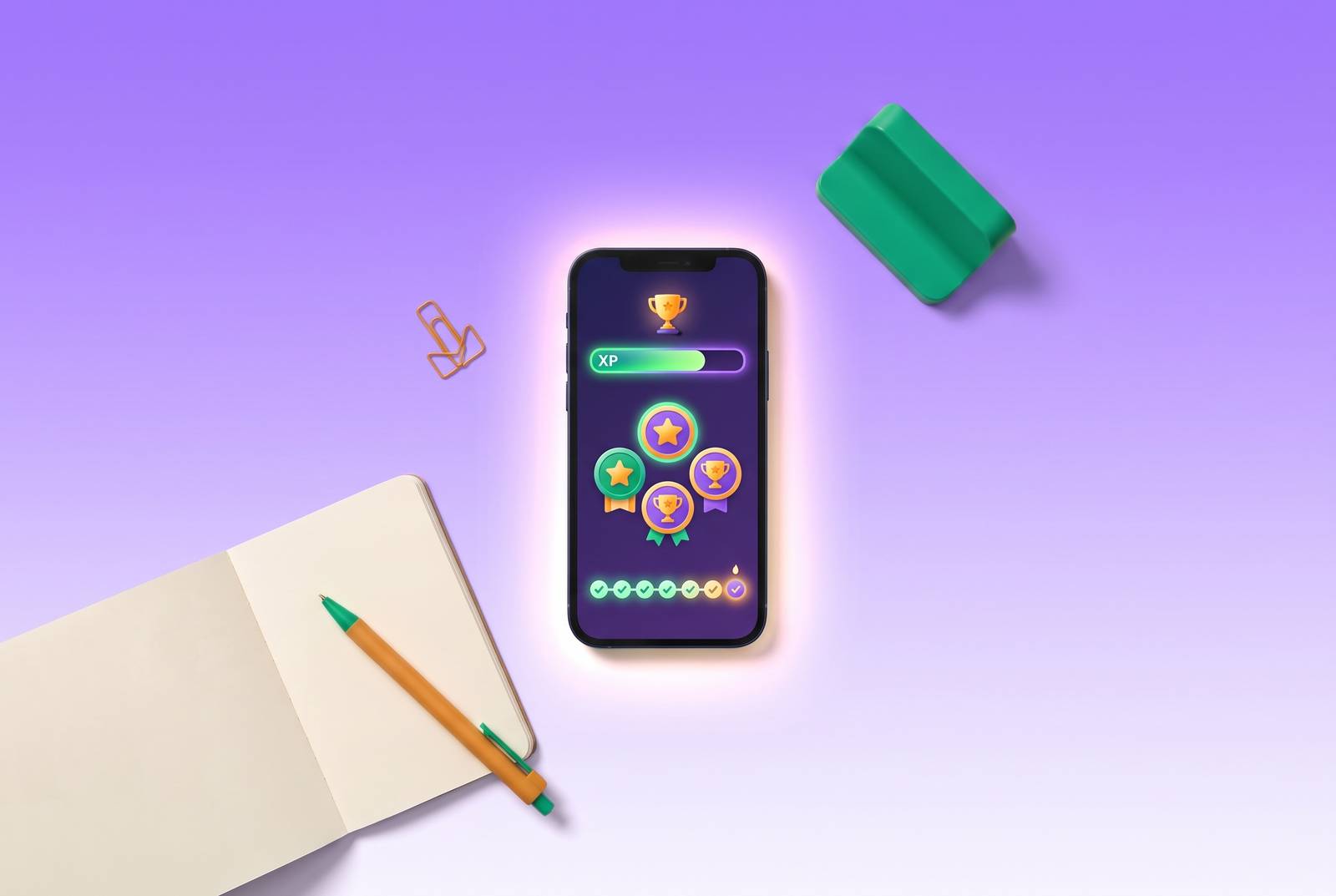
Mindflow combines voice-first goal capture, XP and guided milestones, while Habitica and MainQuest offer other game-based approaches to accountability and progress. This guide to gamified goal tracking for adults with ADHD argues that rewards work best when they arrive promptly, reduce the effort of starting and support a return after missed days. XP and milestone badges matter less as decoration than as part of that larger habit system.
Why ADHD adults struggle with motivation even when they want to do the task
Staring at a task you genuinely want to finish can be harder to explain than avoiding something you dislike. The goal matters, the next step may be clear, and yet starting feels out of reach. That gap between intention and action is not proof that the intention was weak. ADHD can get in the way of the reward signaling that helps turn wanting into doing.
Dopamine signal detection provides one explanation for that gap. A reward signal may be too weak or short-lived to support action, particularly when the payoff is delayed, predictable or uninteresting. A JAMA Network study reported substantially higher dopamine transporter density in adults with ADHD, a mechanism that can clear dopamine from the synapse faster. Impaired anticipatory signaling can also make a future reward less effective at motivating present effort. These mechanisms help explain task paralysis without treating them as a complete account of every adult’s ADHD.
Thomas Brown’s model identifies five triggers that can produce a stronger motivational signal, namely novelty, challenge, urgency, interest and passion. These triggers explain why a task that draws someone in can feel possible while a routine task that matters just as much does not. They also give product design a more useful starting point than an instruction to try harder. Tools built around ADHD behavioral science, including the voice-first coaching app Mindflow, aim to use such triggers to help people get things done. Design should make action easier without requiring the user to manufacture interest first.
Why generic productivity apps fail ADHD adults at the neurological level
A task manager can hold a well-organized plan and still leave its owner struggling to start. Standard productivity systems often depend on manual entry, categorization and daily review, demanding the executive functions ADHD can disrupt. Their rewards may arrive only when the list is finished or a distant goal is reached. For someone who steeply discounts delayed rewards, that payoff has little force at the point of action. If a productivity app or a paper planner stops helping after a day, the mismatch may be structural.
Opening an app, choosing a project, typing a title and setting a date each create another opportunity to disengage. Once a task is captured, skipping a review can hide the fact that it is being avoided, and the system itself can fall out of use. A tool that fits should therefore capture tasks quickly, preferably by voice, sort them on its own, give reminders when they are needed and respond as soon as a task is done. These selection criteria describe capabilities to check for in each gamified app. A reward system cannot make up for a way of entering tasks that the user rarely gets through.
How gamification creates the dopamine signal ADHD brains can actually detect
Gamification changes the timing and form of a reward. Instead of asking someone to work for a distant outcome alone, XP makes progress visible at the moment of action. The proposed mechanism is a phasic dopamine signal, a brief reward response that closes the delay gap. Milestone badges add fresh stimuli, while levels create a continuing challenge. In this design logic, rewards are not ornamental encouragement but an attempt to make otherwise unrewarding activity more immediately engaging.
The distinction between kinds of feedback matters. A number going up shows that something has been done, while a vague feeling of having done too little gives no clear next step. HP loss can also show which actions were missed, though making a consequence easy to see does not always make it helpful. Mindflow’s XP rewards illustrate the emphasis on immediate engagement, with conversation as the described reward trigger. How a product works and how the brain might respond do not directly prove that a given app changes dopamine signaling.
A randomized controlled trial published in Frontiers in Education in December 2025 found improved attention performance and academic achievement in the gamified group, with most gains maintained at follow-up. Both groups worked through identical content, so the design separated the contribution of game mechanics from differences in what participants learned. That makes it useful evidence for the mechanics argument. It does not, by itself, establish the effectiveness of every adult productivity app discussed here.
The limit is that rewards can lose their force. A badge loses its novelty when it becomes familiar, and a broken streak can turn feedback into shame. Surface gamification may therefore get people to follow through for a short time without helping them build a habit that lasts. The meaningful test is not simply whether an app awards points, but whether it helps users continue after the points become less exciting.
Which gamified productivity apps help ADHD adults stay on task, and how do they compare
Mindflow starts with voice-first capture through natural conversation. That removes the need to type and structure a thought at the same time, directly addressing the input barrier. Its goal plans then break overwhelming aims into guided milestones, giving a large task a more manageable shape. This combination makes it a relevant starting option when both initiation and sustained engagement are problems.
Mindflow also gives XP for every conversation and keeps track of progress from one session to the next. Habit scaffolding and structured goal plans are intended to support consistency after the novelty of a new app fades. Its described non-punitive structure matters when setbacks already carry emotional weight. However, guided milestones are not the same thing as milestone badges, and the supplied product description does not establish a separate badge system or external accountability feature.
Habitica uses RPG mechanics, guild accountability and HP consequences to make routine activity part of a game. Social obligation can supply urgency, especially for adults who already enjoy that form of play. The same obligation can generate shame when a streak breaks or missed activity affects the sense of responsibility to a group. It is therefore a better fit for someone who can keep up a routine with those consequences than for someone who keeps getting caught in HP-loss cascades. The distinction concerns the response to setbacks.
MainQuest directly targets the reward-delay gap through immediate XP and visible leveling. It also uses HP loss for missed dailies, replacing an indistinct sense of falling behind with a number. Leaderboards rather than guilds reduce the particular burden of feeling that a team has been let down. That creates a different accountability structure from Habitica’s.
BeeDone frames tasks as quests and awards XP and gems for completion. Leveling unlocks rewards, achievements and new features. Its Deep Work timer also awards XP for finishing a focus block, tying reinforcement to sustained attention. Built-in mini-games, including FlappyBee and BeeSnake, give people a short break within the app, meant to keep a reward from turning into a detour onto social media.
SuperBetter approaches setbacks through reframing. Game designer Jane McGonigal created it following a concussion, and its “Boss Battles” frame difficulties as challenges. A missed task can become a future battle. That is a meaningful distinction when shame is part of the avoidance cycle.
Goblin Tools addresses a different part of the problem. Its free, browser-based Magic ToDo uses AI to break a task that feels overwhelming into subtasks in order, with a spiciness dial that makes the steps smaller. It has no XP or badge mechanics. Its role is therefore a task-paralysis aid used with a gamified system.
Focusmate supplies virtual body doubling, or working in another person’s presence, offering accountability through social presence. Body doubling has promising anecdotal support but limited formal empirical evidence. It is another complementary mechanism.
Finch, Forest, DopaLoop and Amazing Marvin are also named as options buyers consider, but the supplied material does not describe their mechanics. It does not establish their reward timing, milestone systems, input friction or accountability features. Assigning them an ADHD-specific fit would therefore require assumptions. This comparison leaves those capabilities unresolved rather than treating missing information as either a benefit or a limitation.
What to look for when choosing between these tools, given that ADHD is not one condition
The comparison is not a universal ranking because executive-function difficulties do not follow one pattern. A 2026 mixed-method neurocognitive study in a neurology journal examined ADHD, dyslexia and comorbid presentations and identified three profiles, namely globally reduced executive functioning, verbal-mnestic executive vulnerability and selective executive control deficit. Those findings give reason to look at different needs, but do not show how to sort all ADHD adults into simple groups by app. They also do not establish which product fits each profile. The failure pattern that repeatedly interrupts your own system provides a practical starting point.
Does another person’s expectation create useful urgency, or does it make returning harder after a missed day. Guild accountability may answer the first need while worsening the second. Likewise, do broken streaks lead to a brief interruption or complete abandonment. If the latter is familiar, recoverable framing such as SuperBetter’s Boss Battles or Mindflow’s non-punitive structure deserves more weight than elaborate consequences. The relevant comparison is how a tool handles the day after a lapse.
Input friction calls for a different question. If tasks disappear before they are recorded, voice-first capture may help get them onto the list. If the task gets onto the list but is still too big to start, guided milestones or Goblin Tools’ task-breaking mechanics tackle what is getting in the way right now. Reward timing, goal structure, accountability and ease of initiation should therefore be judged separately. An app can be strong in one area without answering the problem that blocks you.
There is also an identity cost that completion statistics can miss. A 2026 scoping review in Clinical Psychologist found elevated early maladaptive schemas among people with ADHD, particularly defectiveness/shame, social isolation/alienation and failure to achieve. It linked these patterns to negative early experiences and persistent criticism. A tool that activates those beliefs through failure states may work against its user even when some tasks get done. Lasting support needs to make room for the person.
Building a daily habit system around whichever gamified tool you choose
With every gamified tool, there is a risk that the novelty will wear off before a habit takes hold. More badges cannot reliably solve a routine that depends on feeling interested each morning. Scaffolding provides a small daily action with a stable place in the day and a planned route back after interruption. The app supplies reward feedback, while the routine reduces the need to decide whether to use it. Neither part should be expected to do the other’s job.
The first stretch after waking can be difficult when executive function is low and each decision adds effort. Make opening the chosen tool a small, non-negotiable daily action, attached to an existing behavior such as morning coffee or brushing teeth. This habit stacking gives app use a cue in the moment so it depends less on feeling driven by a future reward. The first commitment is just to start the routine, without having to finish an ambitious plan before the day starts.
Where voice capture is available, capture first and organize later. Speaking removes the demand to think, type and categorize simultaneously. That separation matters because a thought that is never captured cannot benefit from reminders, milestones or rewards. Once it is recorded, structured goal plans or task-breaking tools can turn it into manageable action.
Decide in advance what happens when a streak breaks. Resume without reviewing the failure, use a recoverable frame if the app offers one, and treat returning as the win. That protocol prevents continuity from becoming a test that one missed day can permanently fail. Over time, small daily wins can compound into behavior that needs less prompting. The purpose of XP and milestones is not endless novelty, but enough supported repetition for the habit to begin carrying itself.
Sources
- Evaluating attention deficit and hyperactivity disorder (ADHD): a review of current methods and issues
- Editorial: Deciphering dopamine dysregulation in adult ADHD
- You Are Not Alone: Designing Body Doubling for ADHD in Virtual Reality
- Toward Neurodivergent-Aware Productivity: A Systems and AI-Based Human-in-the-Loop Framework for ADHD-Affected Professionals
- (PDF) Effectiveness of a gamified educational application on attention and academic performance in children with ADHD: an 8-week randomized controlled trial
- Frontiers