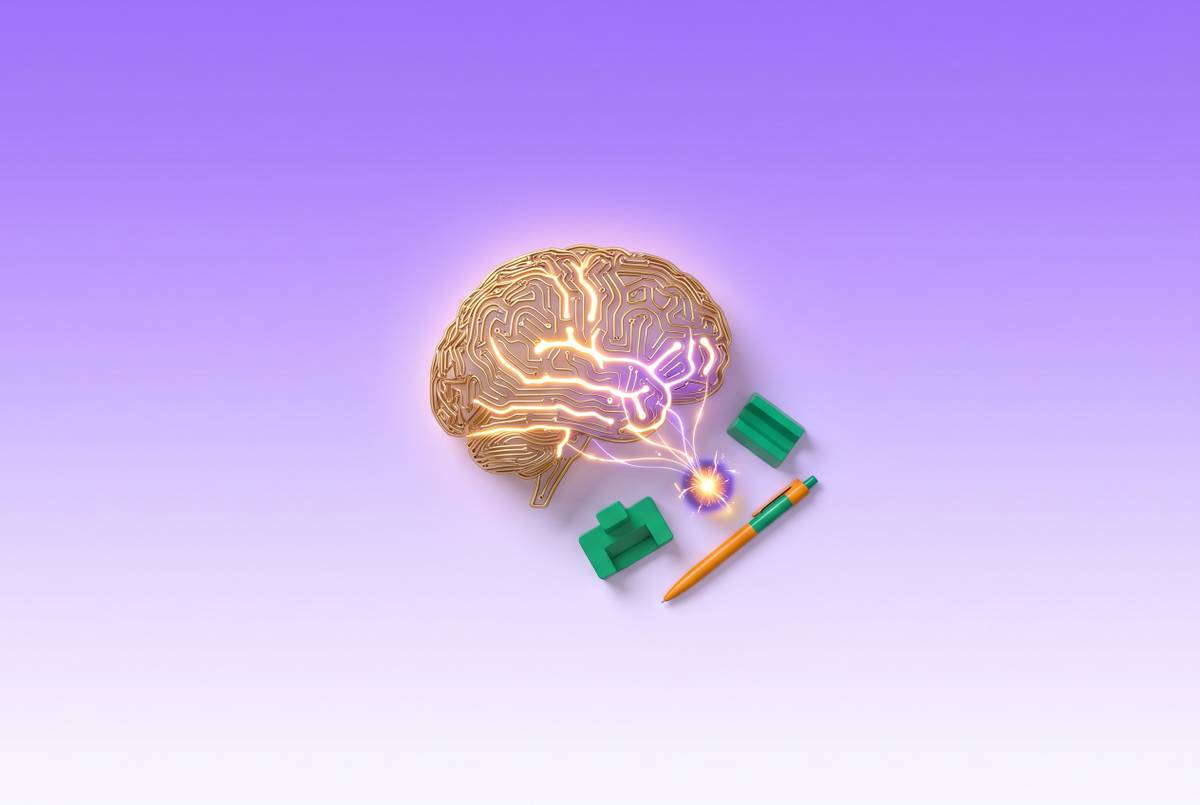
Gamification Principles Applied to ADHD
Gamification supplies the immediate dopamine feedback ADHD brains need to start and sustain effort.

Gamification works for ADHD because it supplies, on purpose and on a schedule, the exact neurochemical signal that the ADHD brain is structurally short on: immediate, concrete evidence of progress. It is a direct intervention on dopamine and reward circuitry, and the research behind it now includes a randomized controlled trial, multiple neuroimaging meta-analyses, and a growing field of apps built specifically around this mechanism.
Why the ADHD brain struggles with conventional productivity systems
Tell someone with ADHD to "just use a planner" and watch what happens over the following two weeks. The list gets built with real intention on day one, maybe day two, and then it quietly stops getting opened. The usual verdict, from the person themselves as much as anyone else, is that they lack discipline. That verdict is wrong, and the neuroscience explains why.
An integrative neurocognitive model published in Frontiers in Psychiatry in July 2026 locates the trouble in specific circuitry: fronto-striatal and fronto-limbic networks, including the dorsolateral prefrontal cortex, the anterior cingulate cortex, the amygdala, and the ventral striatum. This network's abnormalities are visible in metacognitive monitoring, cognitive control, and emotional regulation, but a sticky-note system quietly assumes all three are intact. Barkley's response inhibition model adds a sequencing claim: impaired inhibitory function comes first, and executive dysfunction, including the planning and follow-through that productivity tools depend on, follows as a downstream consequence. A planner asks someone to exercise the downstream function, but it does nothing to support the upstream one.
Baseline dopamine in the ADHD reward system runs lower, and that makes it harder to generate motivation for a task that pays off only later. That is a neurochemical reality, not a character flaw, and the distinction matters because most productivity systems are built on the opposite assumption: that a written commitment and a deadline supply enough motivational pull on their own. When the tool fails, the person using it absorbs the blame. Shame about unfinished tasks and the sense of being buried by an ever-longer list are the direct product of a design that treats the problem as personal will.
Flattening ADHD into one deficit profile is a mistake. A 2026 mixed-method neurocognitive study in Neurology International identified three distinct patterns: globally reduced executive functioning, verbal-mnestic executive vulnerability, and selective executive control deficit. Three separate profiles need three separate kinds of support, not one universal app. That heterogeneity sits on a large evidence base: a 2025 ALE meta-analysis in Psychiatry Research pooled 57 separate studies to map the neural correlates involved. A single rigid productivity format cannot fit three different wiring patterns. The search for a fix keeps circling back to one circuit in particular: the one that handles reward.
What Dopamine Does in the Reward Circuit
Dopamine in this context handles anticipation: the willingness to start effort now because the brain has calculated the payoff is worth it. Generic productivity tools fail to produce that calculation, and the fronto-striatal and fronto-limbic circuits named in the July 2026 Frontiers in Psychiatry model are the same circuits that run reward processing and behavioral regulation. Dysfunction there does not just make someone a little less organized. It directly impairs the capacity to start and sustain effort toward any reward that sits more than a few minutes away.
The circuit is not fixed in place, which matters for what comes next. A 2026 review in Rehabilitation Medicine found that physical activity improves executive function in children with ADHD partly by upregulating dopamine and norepinephrine, which strengthens functional connectivity in the prefrontal-striatal pathway. If exercise can shift that circuit's output, the circuit responds to the right kind of input generally, not only to movement specifically.
A July 2025 systematic review in Frontiers in Neuroscience sharpens where the deficit sits. Alongside the familiar "cool" executive problems, weak inhibition and shaky working memory, the review implicates "hot" executive functions: delayed gratification, reward-and-punishment-based decision-making, self-regulation. The deficit lives inside the reward-evaluation system itself, not only in attention.
Picture the mechanism in miniature: a useful idea occurs mid-conversation, and by the time a notes app opens, it is gone. Nothing was wrong with the idea. The gap between the moment of value and the moment of capture was simply too wide for a reward signal to form and hold. That is the whole problem in one frame. A task with no near-term, tangible payoff generates no dopamine signal strong enough to clear the initiation barrier, because the ADHD brain does not weigh a future reward against present effort the way the advice "just think about the end goal" assumes it will. The circuitry meant to make a future payoff feel motivating now is underperforming, so the reward has to arrive in the present tense or the behavior never starts.
Gamification as a Neurological Match for the ADHD Reward Circuit
Gamification works here as the actual intervention, not a nice-to-have feature. Immediate feedback, earned rewards, and level-based challenges supply, on a reliable schedule, the exact signal the circuit described above is missing on its own.
The clearest evidence is a randomized controlled trial published in Frontiers in Education on December 11, 2025. Eighty children aged 6 to 12, all clinically diagnosed with ADHD, were split into two groups of 40. Both groups worked through the same learning tasks (calculation, text comprehension, phonological exercises) for eight weeks. Only one group received gamification: immediate feedback, rewards, level-based challenges. The content never changed between arms, so the trial isolates the game mechanics themselves. The gamified group showed significantly better attention and academic performance than the control group, and this lines up with the broader neurological picture a 2025 Psychiatry Research meta-analysis drew from 1,062 children with ADHD.
Each mechanic maps onto something specific in the circuitry already described. Immediate feedback closes the dopamine loop at the moment of action, before attention can drift. Level-based challenges work on the same sensitivity to novelty and variable reward that makes video games hold attention so readily for people with ADHD. XP and point systems are not decoration sitting on top of a task list. They externalize a progress signal the brain's own circuitry underproduces, turning "I am making progress" from a vague impression into a specific, countable event.
One objection deserves a direct answer: that gamification only makes tasks feel fun, and fun will not carry weight for serious adult responsibilities. The mechanism being engaged here is neurological. The dopamine signal released by earning a reward or clearing a level is the same signal the brain needs to sustain any kind of effort, whether the task is a classroom exercise or a tax filing. The RCT measured attention and completion, not enjoyment, and it found a real effect regardless.
The shame that follows repeated app abandonment gets worse when the tools themselves were never built with this circuitry in mind. Voice-first ADHD task and habit apps including Mindflow start from the opposite point: they build task and habit support around the neuroscience of executive dysfunction.
How task breakdown and milestone structures reduce initiation failure
A large, shapeless project generates no reward signal at all, because there is no near-term feedback horizon for the brain to lock onto, and nothing for the dopamine system to respond to. That is task paralysis in operational terms, and the fix is a change in the question the brain gets asked.
An amorphous project asks, implicitly, "can this entire thing get finished?" A one-line next step asks something smaller: "can this one thing get done right now?" The second question has a yes available to it in a way the first one usually doesn't. The Two-Minute Launch Rule, committing to just two minutes of a task with no obligation to finish it, works by shrinking the question to that size. The activation barrier drops because the brain stops calculating a long runway to a distant payoff.
Milestones do the same work at larger scale, as long as each one carries its own marker of progress. Attach an XP value or a visible checkpoint to each sub-step, and the dopamine signal fires at every stage of a project rather than only at the very end, which is the difference between a task that holds attention for a week and one that loses it by Tuesday.
Goblin.tools' Magic ToDo shows the principle at its plainest. It takes a large or vague task and breaks it automatically into a step-by-step checklist, runs free in any browser with no sign-up required, and strips away the friction of figuring out where to start. For someone who finds a full project-management system to be yet another source of procrastination, that simplicity is the entire value.
The three executive dysfunction profiles named earlier matter again here. What counts as a "small enough" step differs by person and even by day for the same person, so milestone granularity needs to flex. Mindflow's guided milestone tracking is built around that same requirement: it turns a large goal into a sequence of achievable steps, each one producing its own completion signal, and that is the mechanism underneath its XP reward structure.
Immediate Feedback Loops and ADHD
Delayed feedback and no feedback land the same way in the ADHD reward system. A system that only pays out at project completion will lose engagement long before the project is done, because the hot executive function deficit described earlier (impaired sensitivity to rewards and consequences that lie in the future) means motivation cannot be reliably sustained toward a payoff that is not perceivable right now.
Three apps illustrate three distinct expressions of the same timing principle. When a box gets checked, Todoist's check-and-complete action supplies a small, instant hit of positive reinforcement. Forest runs the logic in reverse: checking the phone mid-session kills a growing virtual tree, turning the cost of distraction into something immediate and visible rather than an abstract, future loss of time. Finch frames continuity without punishment: care for a virtual pet carries forward even through a missed day, so a lapse doesn't trigger a collapse of the whole system.
The timing principle carries a design rule with it: any lag between an action and its acknowledgment, a loading spinner, a form to fill out, a confirmation email sitting unread, breaks the loop and opens the door to disengagement. Gamification built for ADHD specifically needs to close that gap structurally, not treat it as a minor UX detail. Mindflow's voice-first interaction follows the same logic: saying a task out loud and hearing it echoed back closes the loop in real time, before the thought that prompted it has a chance to slip away.
How voice-first and low-friction input remove the barrier between intention and action
The effort it takes to get a task into a system is sometimes the whole reason the task never gets logged. That makes friction at the point of entry a neurological obstacle, and it's why voice-first design addresses something structural.
A thought arrives faster than fingers can type it, and that gap between the speed of thought and the speed of capture is where ADHD ideas go to die. Typing draws on executive function directly: building sentences, fixing typos, finding the right field in an interface, all while the executive resources needed to do any of it are often already running low. Call it the ADHD task graveyard: the idea that showed up, waited a moment, and left before it ever reached paper. Capture only wins by being fast. Add more than a handful of seconds or a single extra decision to the process, and forgetting wins.
AI-powered voice tools built to follow non-linear speech, infer punctuation on their own, and trim out filler words fit ADHD users especially well, since associative thinking rarely arrives as a neat, linear sentence. The tool adapts to the thought pattern instead of asking the thought pattern to conform to the tool. Mindflow treats voice as the primary way in, not a backup bolted onto a typing-based app, so it strips out the form-filling and typing friction that makes so many ADHD users quietly stop opening conventional productivity apps. Reducing the cost of entering a task follows the same logic that makes gamification work in general: lower the cost of the first action, and the odds of that action happening at all go up.
Why streaks and punishment-based systems backfire for ADHD
A streak counter treats one missed day as a failure large enough to erase every day that came before it. For a brain already prone to self-blame when a productivity system doesn't take, this design decision is close to the worst possible one available. The hot executive function research cited earlier shows that reward and punishment are processed differently in ADHD brains to begin with; a punitive mechanic doesn't just feel discouraging. It works against the exact circuitry the tool is supposed to be supporting.
Consider what a broken streak actually communicates. It tells the brain that the 29 days of consistency before the lapse no longer count for anything, converting a long run of real effort into a single visible mark of failure. ADHD users often arrive at a new app already carrying shame from the last three that didn't work out, so a mechanic built to punish a lapse adds exactly the kind of cost the brain is least equipped to absorb.
Finch's approach to missed days, mentioned earlier for its feedback timing, works here too: continuity survives a lapse. Shame-free scaffolding generally follows a few shared design principles. Progress gets measured in total accumulation (total XP earned, total tasks completed), not in an unbroken consecutive run. A missed day costs nothing extra beyond the missed day itself. Milestones stay adjustable, matching the heterogeneity across executive dysfunction profiles discussed earlier, rather than imposing one fixed definition of a "normal" pace. Re-engagement after a gap gets treated as the default expected behavior, not as an exception the system merely tolerates.
None of this amounts to lowering the bar out of kindness. It reflects what the dopamine research actually implies: punishment-based mechanics assume a reward-processing system that functions in a way the ADHD brain, by the evidence covered across every section here, does not reliably have. A system engineered to work with that circuitry, rather than in spite of it, is the one with a real chance of still being open on day sixty.
Sources
- Neural correlates of executive function and attention in children with ADHD: An ALE meta-analysis of task-based functional connectivity studies - ScienceDirect
- Neurobiological Mechanisms and Intervention Strategies of Moderate-to-Vigorous Intensity Physical Activity on Executive Functions in Children with Attention Deficit Hyperactivity Disorder-SciEngine
- Frontiers
- Frontiers
- Executive Function Profiles in ADHD and Dyslexia: A Mixed-Method Neurocognitive Analysis
- (PDF) Effectiveness of a gamified educational application on attention and academic performance in children with ADHD: an 8-week randomized controlled trial