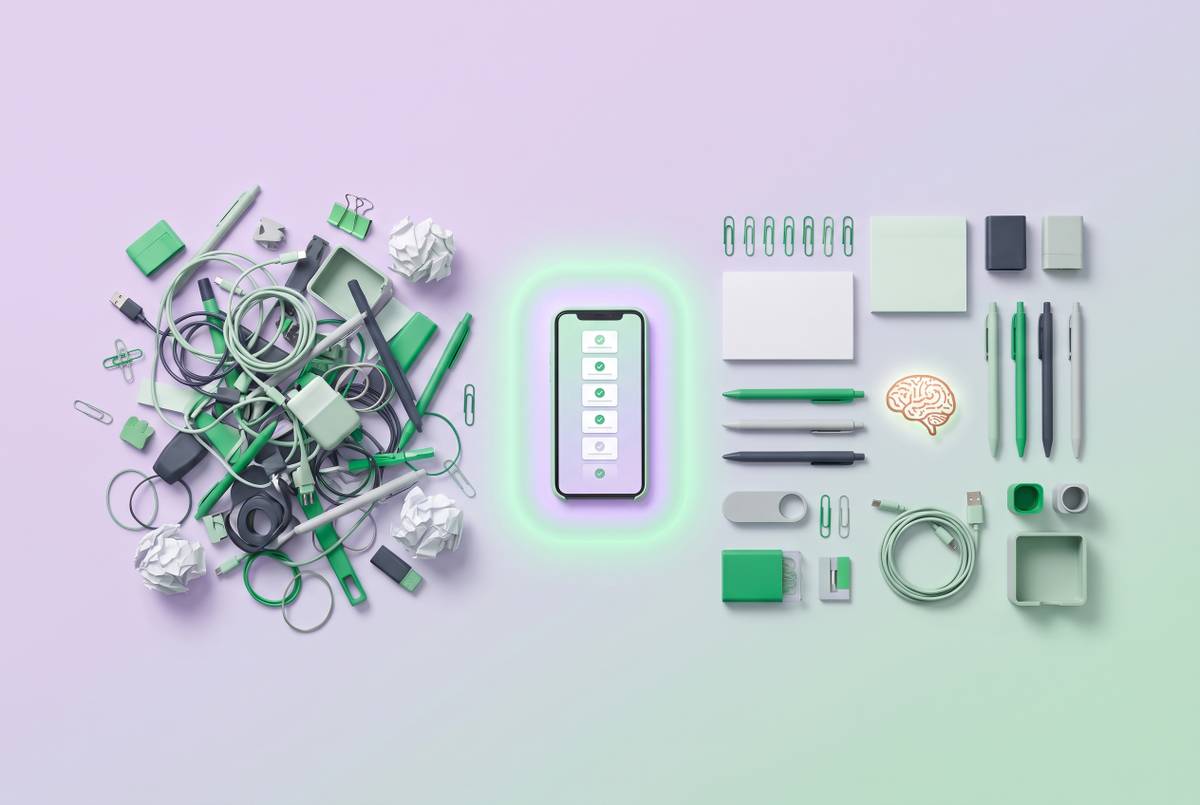
Breaking Out of ADHD Freeze Mode
How to restart your brain when ADHD task paralysis takes hold.

Breaking Out of ADHD Freeze Mode.
Why ADHD freeze isn't a willpower problem (it's a brain wiring problem)
Freeze mode is what happens when someone stares at a task they know matters, understands the deadline, wants to move, and simply cannot. It's not procrastination in the way most people use that word, and it's not laziness either, despite how often those labels get attached to it. Unlike ordinary delay, where a person chooses to put something off, ADHD task paralysis frequently triggers an actual stress response, one that locks the body and mind in place rather than letting them wander toward something easier. This changes what kind of problem this actually is.
Call it what the conventional framing insists on calling it: not trying hard enough, avoidant, undisciplined. None of that holds up against the data. Roughly 15.5 million adults in the U.S. currently carry an ADHD diagnosis CHADD. It's a routine, daily occurrence for millions of adults who are, in most other respects, entirely capable and competent CHADD.
So what is actually happening in the moments before someone freezes? Freeze is a predictable output of how the ADHD brain is wired, and once the mechanism is visible, the tools for working around it stop feeling like generic advice and start feeling like they were built for the actual problem. Move from the neuroscience of what's happening underneath the freeze to a toolkit built specifically around the brain's dopamine and initiation wiring, rather than one that assumes the wiring is fine and the person just needs to push harder.
Executive dysfunction and the parts of it that produce freeze
Executive function is the term for a cluster of cognitive skills, working memory, inhibitory control, cognitive flexibility, planning, prioritizing, and time management, that together govern goal-directed behavior. Think of it as the brain's project management system: it decides what to do first, holds the plan in mind while doing it, and adjusts course when something changes. When that system runs smoothly, a person barely notices it's there.
ADHD and executive dysfunction are tightly linked, though not identical, and the research volume on this connection has grown substantially. A bibliometric analysis identified 2,898 papers on executive functions in ADHD within the Web of Science Core Collection over just the past decade A bibliometric analysis of executive functions in ADHD mapping trends and hotspots. Separately, some estimates suggest that as many as 80 to 90% of adults with ADHD struggle with executive dysfunction on a daily basis drsharonsaline.com. That's not a niche subset of the population managing an occasional bad day. That's the majority experience.
But EF is abstract until it's broken into pieces, and freeze doesn't come from EF failing in general, it comes from specific sub-domains breaking down in specific ways. Task initiation failure is probably the most direct cause: the ADHD brain struggles to generate its own internal "go" signal, and the wall that appears right before starting isn't imagined, it registers as something closer to a physical barrier. Working memory gaps compound this, because holding several steps of a task in mind at once becomes difficult, and a task that can't be mentally organized starts to feel unnavigable before a single action gets taken. Time blindness distorts how far away or how close a deadline feels, and either extreme, too urgent or too distant, can shut down action rather than prompt it. Vague or oversized tasks trigger something closer to panic than mere reluctance, and the brain's response to that panic is often to shut down instead of engage. Layered on top of all this is decision paralysis: when a task presents too many possible paths forward or too much uncertainty about which one is correct, the inability to choose becomes its own form of freeze.
One nuance deserves attention here. Not every person with ADHD shows an identical executive function profile. Recent psychiatric research has pointed out that some individuals present primarily with motivational or emotional dysregulation rather than classic EF deficits, which explains why a single one-size-fits-all intervention rarely works across the board. And then there's the anxiety layer: people with ADHD are up to six times more likely to experience an anxiety disorder, and anxiety doesn't sit quietly alongside freeze, it compounds it. That combination is part of why freeze can feel catastrophic in the moment rather than merely inconvenient. It's closer to a full-body alarm going off over a task that, from the outside, might look completely mundane.
The dopamine and initiation wiring underneath freeze
ADHD gets filed under attention disorders, but that framing undersells what's actually going on. At its core, ADHD involves a dopamine-regulation problem: the brain's reward and motivation circuitry doesn't fire reliably when a task doesn't offer enough built-in stimulation. That's not inconsistency or a moral failing. It's neurochemistry doing exactly what neurochemistry does.
Dull or repetitive tasks simply don't generate enough dopamine to cross the threshold needed for initiation. Boredom isn't functioning as a mood here, it's operating as a measurable neurological state. Once that idea lands, the practical implications basically write themselves: interventions that actually work are the ones that manufacture novelty, urgency, accountability, or reward artificially, because the brain isn't going to generate that signal on its own.
Morning hours deserve particular attention. ADHD brains produce less dopamine early in the day and take longer to shift out of a resting state into active engagement. The very first task on the agenda faces the steepest uphill climb of the entire day. The resistance isn't imagined, and it isn't really about the task itself so much as the hour it's being attempted in.
There's also an emerging, still-developing thread of research on sensory processing. A study published in the Journal of Affective Disorders Reports found preliminary evidence that sensory processing patterns may interact with core ADHD symptoms in ways that affect executive functioning, particularly around working memory and inhibitory control, although those interactions didn't hold up after correction for multiple statistical comparisons. Treat that finding as suggestive rather than settled. But anecdotally and mechanistically, it tracks with something a lot of people already sense: harsh lighting, scratchy clothing, or background noise can derail a task before it even starts, adding friction to an already fragile initiation process.
None of this is meant to hand over solutions yet. It's meant to establish a baseline requirement for whatever solution comes next: it has to work with the dopamine and initiation wiring that's actually present, not against it, and not in ignorance of it.
Breaking the freeze in the moment: immediate tactics that work with ADHD wiring
Everything from here forward maps to a mechanism described above. None of it is generic productivity advice repackaged with an ADHD label slapped on top.
Start with shrinking the task until the brain can actually see a first move. "Clean the kitchen" is a vague, sprawling command that invites choice paralysis, because a to-do list item that's too broad or too undefined offers no clear entry point. "Put three plates in the dishwasher" is different. It's small, specific, and immediately actionable.
Brain dumps serve a related function: getting everything out of the head and onto a page (or screen) frees up working memory that would otherwise be spent just trying to hold the list in place. Some tools are built around this exact principle. Goblin Tools, a free browser-based service that doesn't require an account for basic use, offers a Magic ToDo feature that breaks an overwhelming task into small steps with a single click, targeting task initiation directly rather than asking the user to somehow generate that breakdown themselves.
Urgency and novelty can be manufactured. It's a legitimate workaround for a dopamine system that isn't cooperating. A modified Pomodoro approach, using short timed sprints of about 15 to 20 minutes with a clearly defined endpoint, gamifies the work by giving it a visible start and finish line, and the promise of a break on the other side reduces the sense of overwhelm before starting.
Body doubling, working alongside another person, whether in the same room or over a video call, provides an external accountability signal that can jumpstart engagement when the internal one isn't showing up. In effect, another person's presence substitutes for a regulation mechanism the brain isn't supplying on its own. Voice-first capture works on a similar principle: when typing or writing feels like too much friction to even begin, speaking a task out loud removes that barrier entirely. For a brain stuck at the initiation stage, it functions closer to an accessibility requirement.
Environment matters just as much as technique. Addressing harsh lighting, uncomfortable clothing, or auditory chaos before attempting to start isn't an excuse for delay, it's addressing a documented initiation barrier. Interestingly, white noise research has found effects that run counter to intuition: one study, published in the Journal of Child Psychology and Psychiatry, found that white noise improved cognitive performance in ADHD participants while actually impairing it in neurotypical participants. Designating a specific workspace, using website blockers, and clearing a desk of anything non-essential all serve the same function: externalizing the structure that the brain isn't reliably generating from the inside.
Planning and prioritization structures that prevent freeze from forming
Freeze often doesn't start with the task itself. It starts upstream, with a list that's too long, too vague, or completely unordered. Preventing freeze, then, becomes less about willpower in the moment and more about designing better inputs before the moment ever arrives.
Externalizing working memory needs to become a daily habit rather than an occasional fix. Everything gets written down and sorted, including the "someday" items floating in the back of the mind and today's actual sequence of steps. A fixed morning template, the same rough shape every day, removes decision-making from exactly the point in the day when dopamine is at its lowest and decisions are hardest to make.
The 1/3/5 rule is one large critical task, three medium tasks, and five small, quick ones, scoped for a single day. This limits overburden while still preserving variety, and variety turns out to matter quite a bit for ADHD brains specifically. Having tasks of different sizes on the list means there's almost always an entry point available, even when the big task feels completely frozen.
There's a broader principle underneath all of this. Neurotypical routines tend to lean on habit formation; ADHD routines function better when they're built around reducing the number of decisions required in the first place. Deciding the next day's sequence the night before, for instance, means the morning brain only has to execute, not plan, which matters given how much initiation resistance mornings already carry.
Goal-setting itself can become a freeze trigger when the goal is too large or too abstract. The fix isn't more motivation, it's breaking the goal into milestones small enough that each one carries a visible next step rather than just a distant, undifferentiated outcome. And decision paralysis deserves treatment as its own distinct category of freeze, separate from task initiation failure: when choices multiply, ADHD brains stall, and the countermeasure is deliberately narrowing the options rather than trying to muscle through the noise with sheer willpower.
Building daily habits and routines that reduce how often freeze occurs
Two layers of routine need to be separated out here, because collapsing them into one leads to routines that either feel too rigid or too chaotic. Flexible elements shift depending on energy level and whatever the day actually requires, which keeps the routine from going stale and, ironically, triggering its own boredom-based freeze.
Morning routines carry a particular burden that's more biological than motivational. More than 75% of individuals with ADHD experience sleep problems, including delayed sleep phase and real difficulty waking up, according to a meta-analysis published in Nature and Science of Sleep. That means the morning routine is often starting from a deficit position before the day has even begun. A morning routine that actually works starts the night before, since sleep deprivation all but guarantees the freeze will occur again once morning arrives.
Behavior chains tend to outperform isolated habits for this population. Each completed action serves as the cue for the next one: brushing teeth right after getting dressed, reviewing the day's list while eating breakfast. That kind of chaining externalizes the "what comes next" decision, which removes one of the more common freeze triggers from the morning sequence before it even has a chance to take hold.
Habit stacking works the same way, provided it's done one layer at a time: build a single habit until it runs on autopilot, then add the next one. Piling on too many new habits simultaneously just recreates the exact overwhelm this whole approach is trying to avoid. Movement matters here too. Even light exercise helps release dopamine and serotonin, directly addressing the neurochemical shortfall that makes morning initiation such a steep climb.
None of these individual wins look impressive on their own. But for ADHD brains specifically, small consistent daily wins build the neural pathways and confidence loops that make initiation progressively less effortful over time, which is really the whole point.
Why generic productivity tools fail ADHD brains
A real gap exists between diagnosis and support. About 36.5% of U.S. adults with ADHD received no treatment at all, neither medication nor counseling, in the past 12 months huntingtonpsych.com. A large number of people are managing this condition with whatever tools happen to be available, and most of those tools weren't designed with ADHD in mind at all huntingtonpsych.com.
That's the core failure of generic productivity advice: it assumes executive function is fully intact and simply needs better organizing. It doesn't account for initiation failure, working memory limits, time blindness, or dopamine dysregulation, and applying it to an ADHD brain tends to produce guilt rather than output.
Certain design choices make a tool ADHD-hostile. High setup friction, endless forms, heavy typing requirements, complicated onboarding, adds an initiation demand before the tool has done anything useful at all. Undifferentiated task lists with no sense of size or sequence reproduce the exact choice paralysis this piece has already described. And a lack of any reward signal or progress feedback means nothing is manufacturing the dopamine that would otherwise keep engagement going.
The opposite qualities define what actually works. Low-friction input, voice-first capture especially, treats ease of entry as a genuine accessibility feature rather than a nice-to-have. Built-in goal decomposition breaks large, overwhelming targets into milestones with visible next steps, addressing the structural root of freeze rather than just its symptoms. Reward architecture, XP systems, streaks, visible progress markers, isn't decoration. For ADHD brains, it functions as a scientifically grounded substitute for an internal dopamine signal that isn't firing reliably on its own. And scaffolded habit tracking, the kind that adapts to real variability instead of punishing a missed day, supports consistency without demanding a kind of rigid perfection that ADHD brains were never going to sustain anyway.
An app built specifically around these principles, drawing on behavioral science and executive function research, using voice-first capture, milestone-based goal planning, XP rewards, and guided habit scaffolding, addresses each of these failure points directly. A generic tool expects the user to supply their own executive function, while a well-designed one provides scaffolding for the parts that aren't firing reliably.
Freeze mode isn't a character flaw, and it isn't a permanent condition either. It's the predictable output of a brain that hasn't yet been given the right environment to work in. Building that environment around how the ADHD brain actually operates, dopamine wiring, initiation thresholds, working memory limits and all, stops paralysis from being the default outcome. Forward motion becomes the more likely one instead.